
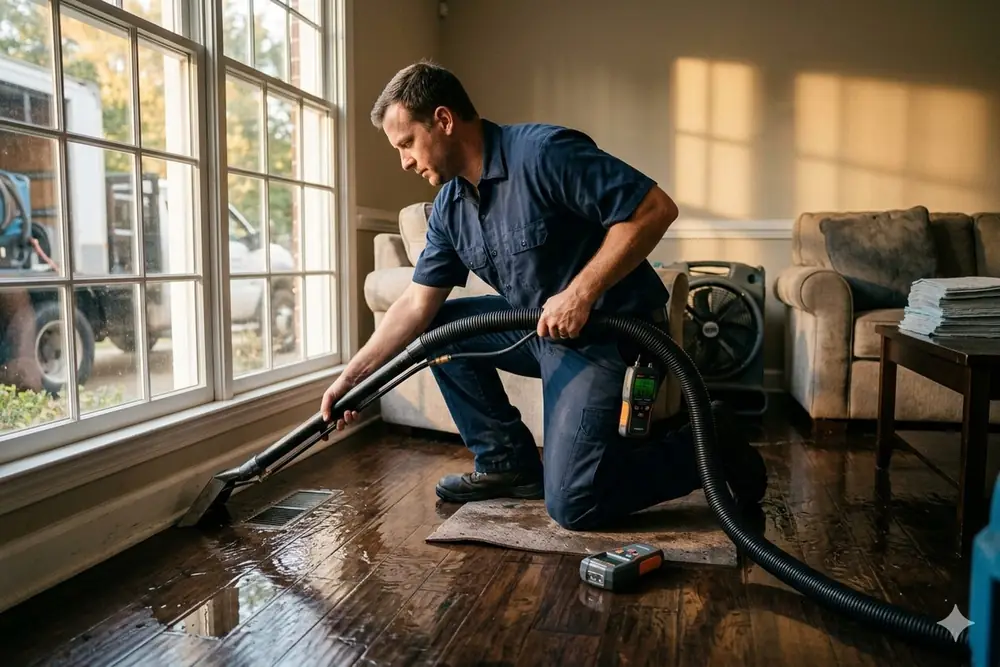
Water Damage Restoration - The Cleanup Phase Done Right
Water Damage Cleanup Charlotte NC
Water Damage Cleanup Charlotte NC covers everything that happens after standing water is gone but the mess is still very real: soaked drywall coming out, ruined carpet padding hauled away, and every wet surface disinfected before mold gets a head start. It is less dramatic than a burst pipe and more thorough than a mop bucket, because materials that look dry on the surface can still be holding water and bacteria underneath. This is water damage restoration Charlotte NC done the right way, with no shortcuts.
[Call Now] · Free on-site assessment · Direct insurance billing · Available 24/7
Cleanup is often confused with extraction, but they are not the same job. Extraction pulls out standing water. Cleanup deals with what is left behind afterward, damaged baseboards, waterlogged insulation, debris from cut-out drywall, and surfaces that need to be cleaned and treated before anyone moves furniture back in. Skipping this step, or rushing it, is one of the more common reasons a water event turns into a mold problem weeks later.
✨ What Cleanup Actually Involves
What Water Damage Cleanup Charlotte NC Includes
Cleanup starts with sorting what can be cleaned from what has to be removed. Drywall that stayed wet for more than 24 to 48 hours usually gets cut out at least a foot above the visible water line, since wicking pulls moisture higher than it looks. Baseboards, insulation, and carpet padding that absorbed water are typically discarded rather than dried, because they hold onto moisture and odor even after they look dry.
Once the damaged materials are out, remaining surfaces get cleaned and treated with an antimicrobial solution. This is not the same as sanitizing after a sewage backup, which needs a different level of disinfection, but it is a necessary step any time water has been sitting against drywall, subfloor, or framing for any length of time.
In Charlotte homes with hardwood or engineered flooring, cleanup crews also check for cupping or separation at the seams before deciding whether flooring needs to come up entirely or can be dried in place. Older homes near NoDa and Plaza Midwood sometimes have flooring installed directly over original subfloor with no vapor barrier, which changes how quickly a cleanup crew needs to move.
Debris removal is a bigger part of cleanup than most homeowners expect. A single flooded room can generate several contractor bags of ruined drywall, insulation, and flooring material, all of which needs to be bagged and hauled out before the space is ready for repairs to begin. Count on water damage restoration Charlotte NC specialists who answer around the clock.
What to Expect During a Cleanup Visit
- Identification of which materials are salvageable and which need to be removed and discarded
- Controlled demolition of wet drywall and baseboards, typically cut in a straight line above the water mark
- Antimicrobial treatment of framing, subfloor, and remaining surfaces before drying equipment goes in
- Bagging and haul-away of debris so the space is clear for repairs once drying is complete
What Happens If Cleanup Is Skipped or Rushed
Leaving wet insulation inside a wall cavity or drying drywall in place instead of cutting it out often just traps moisture where nobody can see it. That trapped moisture is exactly the environment mold needs, and it can take weeks to show up as a smell or a stain, by which point the damage has usually spread further than it would have with a proper cleanup.
Where DIY Cleanup Usually Falls Short
A homeowner can absolutely wipe down a countertop or mop a hard floor. What is harder to do without training is judging how far up a wall moisture has traveled, or knowing which antimicrobial products are appropriate for which surfaces. Guessing wrong on either one tends to cost more later than having a crew make that call up front.
🕒 How It Works
How It Works
Assessment and Sorting
A technician evaluates each affected material, drywall, flooring, insulation, baseboards, and decides what can be cleaned versus what needs to be removed.
Removal and Treatment
Damaged materials are cut out and hauled off, and remaining surfaces are cleaned and treated with an appropriate antimicrobial before the space is closed up again.
Handoff to Drying and Repair
Once cleanup is done, the space is ready for drying equipment if it is still needed, or directly for repair work if drying has already finished. It's water damage restoration Charlotte NC property owners trust when every hour counts.
✨ One Step After Another
Water Damage Cleanup vs Emergency Water Extraction
Extraction happens first and focuses on removing standing water with pumps and vacuums, often within the first few hours of a call. Cleanup happens after, dealing with the debris, damaged materials, and surface treatment that extraction alone does not address. A property can have a fast, well-handled extraction and still need a full day of cleanup work afterward before drying equipment can even go in.
✨ A Typical Call
A Typical Cleanup Call in Charlotte
A common cleanup call follows a slow leak behind a dishwasher that went unnoticed for a week or more. By the time it is discovered, the cabinet base and surrounding flooring are saturated, and a section of drywall behind the cabinet needs to come out.
Another frequent scenario is cleanup after a basement window well backs up during heavy rain, pushing a few inches of water across a finished basement floor. Baseboards, the bottom of drywall, and any stored boxes sitting directly on the floor usually need to be assessed and mostly discarded.
A third scenario involves cleanup following extraction from an upstairs bathroom overflow, where water traveled down into a first-floor ceiling. The cleanup crew has to remove the damaged section of ceiling drywall and treat the exposed framing before repairs can start.
Trained to Make the Removal Call
Deciding what to cut out versus what to leave in place takes judgment built from doing this work regularly. Technicians are professionally trained to read moisture meters, recognize early signs of material breakdown, and apply antimicrobial treatments correctly, so cleanup does not become a second problem down the line. When you need water damage restoration Charlotte NC done right, one call starts the whole process.
⭐ Real Customers
What Charlotte Customers Say
"They explained exactly why the baseboards had to come out instead of just drying them, which made sense once I saw how soft they were."
"The debris was bagged and gone the same day, which made the whole thing feel a lot less overwhelming."
"Appreciated that they treated the studs before closing everything back up instead of skipping that step."
Cleanup crews serve Charlotte and nearby communities including Matthews, Pineville, and Huntersville, working the same removal and treatment process regardless of which side of the metro the call comes from.
❧ FAQ
Frequently Asked Questions
How is cleanup different from extraction?+
Extraction removes standing water, usually within hours of a call. Cleanup happens after, removing damaged materials like wet drywall and insulation and treating surfaces so the space is ready for drying or repair.
Do you remove all the wet drywall or just part of it?+
Only the affected section, cut in a straight line roughly a foot above the visible water line, since moisture wicks higher into drywall than it appears from the surface.
Is the debris hauled away the same day?+
In most cases, yes. Bagged debris from cut-out drywall, insulation, and flooring is typically removed the same visit so the space is clear for drying equipment. Our water damage restoration Charlotte NC crew handles every step from inspection to final walkthrough.
Will you clean carpet or does it have to be replaced?+
It depends on how long the carpet was wet and whether the water was clean. Padding underneath is rarely saved, but the carpet itself can sometimes be cleaned and reused if caught early.
What kind of cleaning product is used on the walls?+
An antimicrobial solution appropriate for the surface and the type of water involved, which is different from a general household disinfectant and different again for contaminated water situations.
Do you handle cleanup for businesses too?+
Yes, cleanup after a commercial water event follows the same process, though the volume of debris and materials involved is often larger than a typical home.
How long does a cleanup visit usually take?+
A single room typically takes a few hours, but a multi-room event with significant demolition can take the better part of a day.
Does cleanup include the actual repairs afterward?+
No. Cleanup prepares the space, removing damaged material and treating what remains. Rebuilding drywall, flooring, and trim is a separate repair phase that follows once everything is dry. That's water damage restoration Charlotte NC homeowners can count on, done right the first time.
Why Cleanup Needs a Trained Eye, Not Just a Mop
The hardest part of cleanup is not the physical labor, it is judging what actually needs to come out. Cutting out more drywall than necessary means more repair work later, while leaving too much in means a mold risk that will not show up right away. A local crew that handles Charlotte water damage cleanup regularly has a feel for how far a given type of leak typically travels.
Charlotte's Humidity and Why Cleanup Timing Matters
Charlotte's summer humidity regularly sits high enough that wet materials left untreated do not get much benefit from just opening a window. Cleanup that happens within the first day or two, before humidity has a chance to slow down natural drying, meaningfully lowers the odds of secondary problems compared to cleanup delayed by a week.
A Few More Things Worth Knowing
- Cleanup debris is bagged separately from regular household trash due to weight and moisture content
- Furniture and belongings in the affected area are typically moved and inspected before cleanup work begins
- The same crew that handles cleanup usually coordinates directly with drying equipment placement afterward
Need Water Damage Cleanup Charlotte NC Today?
Free assessment of what needs to come out versus what can stay, with debris removal handled the same visit whenever possible.
Whether this is cleanup after a fast extraction call or a slow leak you just discovered, the sooner damaged material comes out, the less chance mold has to start.
[Call Now]
- Fully licensed, bonded, and insured crews
- Your insurance claim handled start to finish
- Written scope of work, no surprises
- No hidden fees on any invoice
Send Us Your Details
Prefer not to call right now? Tell us what's going on and a member of our team will follow up with next steps for your property.
Every submission goes straight to our team at info@waterdamagenorthcarolina.com — most people hear back the same day.