
Water Damage Restoration - First On Scene, Every Time
Emergency Water Extraction Charlotte NC
Emergency Water Extraction Charlotte NC starts the moment a pipe lets go, a water heater splits, or a storm pushes water in faster than a floor drain can handle. Every minute standing water sits on flooring or soaks into a wall is a minute closer to warped subfloor, blistered drywall, and rot inside spaces you cannot see. Crews carry truck-mounted extraction units and answer calls around the clock, because the difference between a same-day fix and a gutted room usually comes down to how fast the water gets pulled. For water damage restoration Charlotte NC residents rely on, experience makes all the difference.
[Call Now] · Free on-site assessment · Direct insurance billing · Available 24/7
Not every water emergency in Charlotte looks the same. A supply line behind a washing machine can dump forty gallons in ten minutes, while a slow roof leak during a summer storm might go unnoticed until a ceiling stain shows up two days later. Both situations call for the same first move: get the water out before it spreads sideways under baseboards and vertically up drywall, rather than waiting to see how bad it gets.
✨ What This Service Actually Covers
What Emergency Water Extraction Charlotte NC Involves
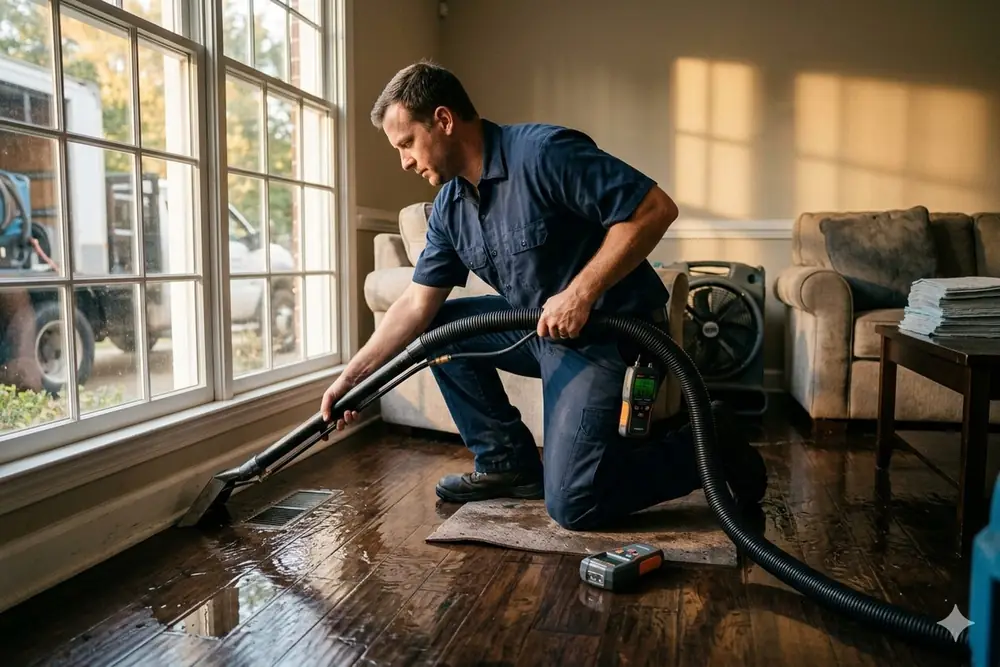
Extraction is the physical removal of free-standing and absorbed water using pumps and truck-mounted vacuum units, not the drying that follows afterward. On a typical call, a technician walks the affected rooms with a moisture meter first, marking how far water has traveled under cabinets, behind baseboards, and into adjoining rooms, because water rarely stays where it started.
In Charlotte's older neighborhoods, houses built before the 1980s often sit on crawlspaces with minimal vapor barriers, so water from a slab leak or a sump failure can travel much farther than the visible wet spot suggests. Newer construction closer to the outer beltline tends to use slab foundations, which changes where extraction crews focus their pumps and where they expect water to pool.
The goal on an extraction call is not just visible water. Carpet padding, the underside of vinyl plank flooring, and the base of drywall all hold water that a mop or a shop vac will not reach, which is why extraction equipment is rated to pull moisture out of porous materials, not just off hard surfaces. This is water damage restoration Charlotte NC done the right way, with no shortcuts.
Access matters too. Extraction crews often have to bring pumps and hose lines through a garage, a side gate, or a finished basement stairwell, and in townhomes near uptown that can mean coordinating with an HOA about equipment sitting in a shared hallway during the job. None of that changes the extraction itself, but it does change how a crew plans the first twenty minutes on site.
What to Expect During an Extraction Call
- A walkthrough with a moisture meter to map how far the water has actually traveled
- Truck-mounted or submersible pumps for standing water, with wet vacuums for saturated flooring and padding
- Photos and readings logged before work starts, useful if you end up filing an insurance claim
- A clear explanation of what is salvageable versus what needs to come out before drying can start
What Happens If Extraction Gets Delayed
Water that sits for more than a day or two starts breaking down adhesives under vinyl and laminate flooring, and drywall that stays wet begins to lose structural integrity at the base. Past the 48-hour mark, the odds of mold starting inside wall cavities go up substantially, which is why extraction calls get answered faster than a routine repair estimate.
Where a Wet Vac Falls Short
A household wet vac can handle a small spill, but it is not built to pull water out of carpet padding or from underneath cabinet toe-kicks, and it has no way to tell you how far water traveled into a wall. Renting extraction equipment for a one-time event usually costs more than calling a crew that already owns it and knows how to read a moisture meter.
🕒 How It Works
How It Works
Free Inspection for Emergency Extraction
A technician arrives, checks the source of the water if it is still active, and maps the affected area with a moisture meter before any equipment comes off the truck. Count on water damage restoration Charlotte NC specialists who answer around the clock.
A Plan Specific to This Call
You get a straightforward rundown of what is being extracted, what is likely to be saved, and roughly how long the extraction phase itself will take before drying equipment goes in.
Extraction, Then Handoff to Drying
Standing water and saturated padding come out first. Once the visible water is gone, the space gets handed to structural drying equipment for the days-long drying phase.
✨ Two Phases, Not One
Emergency Water Extraction vs Structural Drying Services
Emergency extraction and structural drying solve two different problems in the same event. Extraction is the fast, hands-on removal of standing and absorbed water, usually finished in a matter of hours. Structural drying is the slower phase that follows, using air movers and dehumidifiers over several days to bring the wood, drywall, and subfloor back down to a safe moisture level. Skipping extraction and going straight to fans rarely works, because fans move air, not standing water.
✨ A Typical Call
A Typical Emergency Extraction Call in Charlotte
A common call starts with a washing machine supply line failing overnight in a laundry room near the kitchen. By morning, water has traveled under the laundry room threshold and into the hallway, soaking roughly six feet of carpet and the bottom edge of the drywall. It's water damage restoration Charlotte NC property owners trust when every hour counts.
Another frequent scenario involves a water heater in a closet or garage that ruptures at the tank seam. Because water heaters often sit on a small platform, the leak can go unnoticed for hours until it reaches the garage floor drain or starts seeping under an adjoining wall.
A third type of call comes from a second-floor bathroom overflow that travels down through a ceiling below. In these cases, extraction crews work in two rooms at once, pulling water from the upstairs floor while also addressing water pooling on the downstairs ceiling and light fixtures.
Trained for Fast-Moving Water
Extraction work moves quickly and the equipment involved, submersible pumps, truck-mounted vacuum units, moisture meters, takes real training to use safely and effectively. Technicians are professionally trained to identify contaminated water sources, protect electrical fixtures during extraction, and avoid turning a wet-flooring situation into a safety hazard.
⭐ Real Customers
What Charlotte Customers Say
"Water was still coming up through the baseboards when they got here and had it pumped out within the hour."
"They checked under the cabinets with a meter before saying anything was fine, which I appreciated."
"Called after hours when a line broke in our stockroom and someone was already headed our way before I hung up."
Emergency water extraction crews cover Charlotte and the surrounding metro, from Ballantyne and South End to University City and the neighborhoods along the Catawba River corridor. When you need water damage restoration Charlotte NC done right, one call starts the whole process.
❧ FAQ
Frequently Asked Questions
Do you offer emergency water extraction in Charlotte around the clock?+
Yes. Calls tied to burst supply lines and appliance failures do not wait for business hours, so extraction crews are dispatched 24 hours a day, including weekends and holidays.
How is extraction different from drying my house out?+
Extraction removes standing and absorbed water with pumps and vacuums, usually within hours. Drying uses air movers and dehumidifiers over several days afterward to bring building materials back to a safe moisture level.
Will you know how far the water traveled?+
A technician checks with a moisture meter along baseboards, under cabinets, and into adjoining rooms, since water tends to travel sideways under flooring further than it looks from the surface.
Can carpet be saved after extraction?+
Often, yes, if the water was clean and extraction happened within the first day or so. Padding underneath is less likely to be saved since it holds water like a sponge. Our water damage restoration Charlotte NC crew handles every step from inspection to final walkthrough.
What if the water came from a sewage backup instead of a clean line?+
Contaminated water changes the approach. Extraction still happens, but affected porous materials like carpet padding and drywall are typically removed rather than dried and reused.
Do you work on both homes and businesses?+
Yes. Commercial extraction calls, restaurants, retail spaces, small offices, are handled the same way as residential calls, though scheduling around business hours sometimes shapes when work happens.
How much does an extraction call cost?+
Every call starts with a free on-site assessment, so pricing depends on the size of the affected area and how far the water traveled before an estimate is given.
Will extraction stop mold from starting?+
Fast extraction significantly lowers the odds of mold getting a foothold, but it is not the whole prevention story. The drying phase that follows extraction is what actually brings moisture levels down enough to stop growth. That's water damage restoration Charlotte NC homeowners can count on, done right the first time.
Do you move furniture before extraction starts?+
Yes, when it is safe to do so. Furniture legs sitting in standing water get lifted onto blocks or moved out of the room entirely so extraction and drying can reach the floor underneath without obstruction.
Why a Local Crew Handles Extraction Calls Differently
National franchise brands operating in Charlotte often route emergency calls through a dispatch center outside the state before a local crew gets involved, adding time to a situation where minutes matter. A team based in Charlotte already knows which neighborhoods run on crawlspaces versus slab, and can get moving without waiting on a call center to confirm the job.
How Charlotte's Clay Soil Affects Extraction
Piedmont clay underneath most of the Charlotte metro drains slowly compared to sandier soil found elsewhere in the state, so water from a foundation leak or heavy yard runoff tends to linger against a home's foundation longer than homeowners expect. That slower drainage is part of why extraction calls in Charlotte often involve water that has already worked its way past the point where it was first noticed. That same slow-draining clay is a reason why a home that flooded once during a heavy storm is more likely to see standing water again in a similar storm, since the ground around the foundation rarely fully dries out between events.
A Few More Things Worth Knowing
- Extraction equipment runs on generators or truck power when a breaker has tripped from water near an outlet
- Pet bowls, rugs, and furniture legs sitting in standing water get moved before pumping starts, when it is safe to do so
- There is no swapping crews mid-job. The technician who starts the extraction sees it through to the handoff for drying
Need Emergency Water Extraction Charlotte NC Right Now?
Free assessment, honest answers about what is salvageable, and a crew that already owns the equipment instead of borrowing it.
Whether this is a fresh line break or water you noticed after getting home, the sooner extraction starts, the less it spreads.
[Call Now]
- Every technician licensed, bonded, and insured
- We deal with your insurer directly
- A clear written scope before we start
- No hidden costs, ever
Send Us Your Details
Prefer not to call right now? Tell us what's going on and a member of our team will follow up with next steps for your property.
Every submission goes straight to our team at info@waterdamagenorthcarolina.com — most people hear back the same day.