
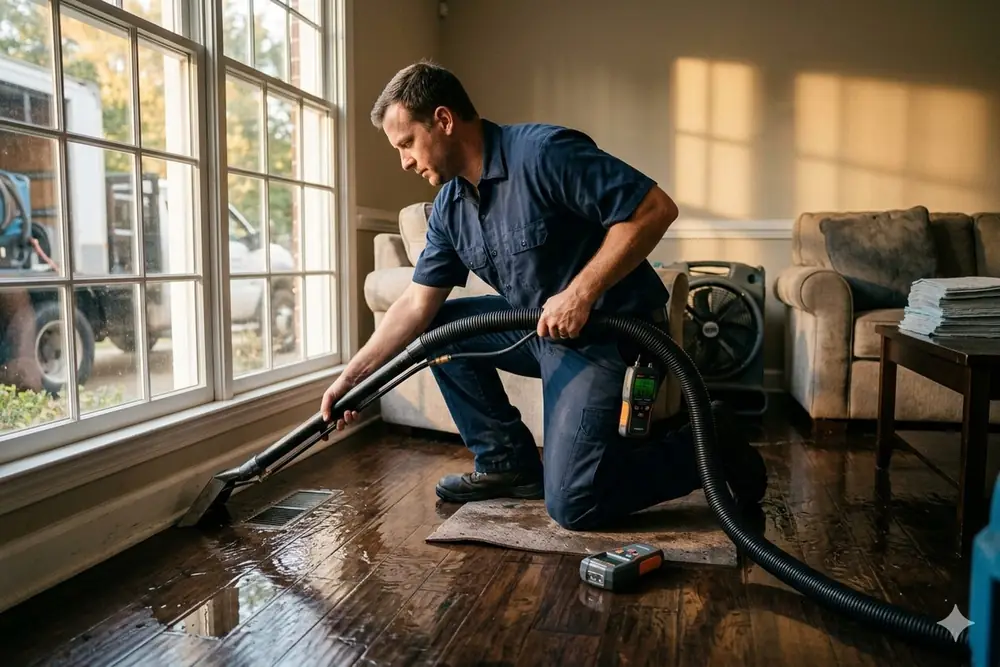
Flood Cleanup - Treating What Contaminated Water Leaves Behind
Post-Flood Sanitization Charlotte NC
Post-Flood Sanitization Charlotte NC treats surfaces exposed to contaminated flood water with an antimicrobial process well beyond routine household cleaning, since flood water from outside a home typically carries bacteria, chemicals, and contaminants that a general disinfectant wipe-down doesn't reliably address. Sanitization is what actually makes a flood-affected space safe to use again, not just dry. Count on water damage restoration Charlotte NC specialists who answer around the clock.
[Call Now] · Free on-site assessment · Direct insurance billing · Available 24/7
Drying alone doesn't make a flooded space safe if the water involved was contaminated. Bacteria and other contaminants can remain on and inside surfaces even after all visible moisture is gone, which is why sanitization is treated as its own distinct step rather than something that happens automatically as part of drying.
✨ What Sanitization Actually Involves
What Post-Flood Sanitization Charlotte NC Covers
Sanitization uses antimicrobial products specifically suited to the type of surface and level of contamination involved, applied to framing, subfloor, and any remaining hard surfaces after debris removal and extraction are complete. Different surfaces, concrete, wood framing, drywall, require different application approaches to be effective.
Odor control is closely tied to sanitization, since lingering smell after a flood is often a sign that bacteria or organic material weren't fully addressed rather than just a cosmetic issue on its own. Treating the underlying contamination typically resolves odor more effectively than masking it with fragrance products.
Timing matters for sanitization to work properly. It generally happens after debris and standing water are removed but before final drying and rebuild, since sanitizing around debris that's about to be removed anyway is inefficient, and sanitizing after rebuild traps whatever wasn't fully treated behind new materials.
What to Expect During Post-Flood Sanitization
- Antimicrobial treatment matched to the surface type and contamination level involved
- Sanitization scheduled after debris and standing water removal but before drying and rebuild
- Attention to odor sources as an indicator of remaining contamination, not just a smell to mask
- Documentation of sanitization work, useful for both peace of mind and insurance records
What Happens If Sanitization Is Skipped
Drying a flood-affected space without sanitizing it first can leave bacteria and contaminants in place even once everything looks and feels dry, which creates an ongoing health concern that isn't solved by moisture control alone, and can also cause persistent odor that doesn't resolve on its own.
Why Household Disinfectant Isn't the Same as Flood Sanitization
A household disinfectant spray is designed for everyday surface cleaning, not for the level of contamination typical of external flood water. The products and application methods used in professional sanitization are chosen specifically for the contamination levels flood water carries. It's water damage restoration Charlotte NC property owners trust when every hour counts.
🕒 How It Works
How It Works
Assess Contamination Level
The type of flood water and affected surfaces determine which antimicrobial products and application methods are appropriate.
Apply Targeted Treatment
Framing, subfloor, and remaining surfaces are treated with antimicrobial products suited to each material.
Confirm and Document
Treated areas are checked for lingering odor or contamination signs, with the work documented for the homeowner's records.
✨ Different Purpose, Different Product
Post-Flood Sanitization vs Flood Debris Removal
Debris removal physically clears out damaged materials that can't be salvaged. Sanitization treats what remains behind, framing, subfloor, hard surfaces, for contamination that debris removal alone doesn't address. Both typically happen in the same overall recovery, but they solve different parts of the problem and generally happen in that order.
✨ A Typical Call
A Typical Sanitization Call in Charlotte
A common call follows a basement flood where contaminated groundwater backed up through a floor drain. After debris removal and extraction, the exposed concrete and framing are treated with an antimicrobial solution appropriate for that level of contamination before drying begins.
Another frequent scenario involves a home affected by creek overflow, where sanitization has to address a broader footprint than the visible waterline, since contaminated water often traveled further into wall cavities and under flooring than it appears at first glance.
A third scenario comes from a persistent musty odor reported weeks after a flood was supposedly resolved, which on inspection traces back to an area that was dried but never properly sanitized, requiring the sanitization step to be completed after the fact. When you need water damage restoration Charlotte NC done right, one call starts the whole process.
Trained in Contamination-Level Treatment
Choosing the right antimicrobial product and application method depends on correctly identifying the contamination level and surface type involved, not applying a single generic treatment everywhere. Technicians are professionally trained in these distinctions so sanitization actually addresses the specific risk present.
⭐ Real Customers
What Charlotte Customers Say
"The musty smell that lingered after another company dried our basement was gone once sanitization was actually done properly."
"They explained why our concrete needed a different treatment than the wood framing next to it, which I hadn't considered."
"Appreciated getting documentation of the sanitization work for our own records, not just a verbal assurance it was handled."
Post-flood sanitization is available throughout Charlotte and surrounding communities affected by creek overflow, storm flooding, and groundwater intrusion.
❧ FAQ
Frequently Asked Questions
Is sanitization necessary after every flood, or just severe ones?+
Any water considered contaminated, which includes most water entering from outside a home, generally warrants sanitization regardless of how minor the flooding looked. Our water damage restoration Charlotte NC crew handles every step from inspection to final walkthrough.
How is post-flood sanitization different from regular cleaning?+
Regular cleaning addresses visible dirt and everyday germs. Sanitization after a flood uses antimicrobial treatment specifically suited to the contamination levels typical of external flood water.
Can sanitization get rid of a lingering musty smell?+
Often, yes, if the smell is coming from bacterial or organic contamination that wasn't fully addressed during an earlier cleanup, sanitization treats the underlying cause rather than masking it.
Does sanitization happen before or after drying?+
Generally before, since sanitizing surfaces before drying equipment goes in ensures contamination is addressed rather than sealed in behind new materials later.
Are the sanitization products safe for pets and family members?+
Products are chosen and applied according to safety guidelines for occupied spaces, with any necessary precautions communicated before and during treatment.
How do you know if a space still has contamination after drying?+
Persistent odor, previous exposure to contaminated water, or a documented gap in the original cleanup process are all signs sanitization may not have been completed properly.
Is sanitization included with flood water removal, or a separate step?+
It's typically part of the same overall recovery but treated as its own distinct step, occurring after debris and water removal and before drying and rebuild. That's water damage restoration Charlotte NC homeowners can count on, done right the first time.
Do you provide proof that sanitization was completed?+
Yes, documentation of the sanitization process is provided, which is also useful supporting material for insurance claims.
Why Sanitization Gets Skipped More Often Than It Should
Sanitization is less visually obvious than water removal or debris cleanup, which sometimes means it gets rushed or skipped by crews focused primarily on the dramatic, visible parts of flood recovery. A team that treats sanitization as a distinct, necessary step in Charlotte flood recovery catches this gap rather than assuming drying alone solves the contamination problem.
Why Charlotte's Flood Sources Vary in Contamination Level
Flood water in the Charlotte area can come from several different sources, storm runoff, creek overflow, groundwater backup, each carrying somewhat different contamination profiles. Sanitization approaches are adjusted based on the likely source, rather than treating every flood event as identical from a contamination standpoint.
A Few More Things Worth Knowing
- Sanitization is applied to framing and subfloor even when those materials will eventually be covered by new drywall or flooring
- HVAC systems affected by flood water sometimes require separate sanitization attention if air was circulated during the event
- A follow-up odor check after drying helps confirm sanitization fully addressed the underlying contamination
Need Post-Flood Sanitization Charlotte NC You Can Trust?
Free assessment of contamination level and affected surfaces, with antimicrobial treatment suited to what your flood actually involved.
A space that looks dry isn't automatically safe. Proper sanitization is what actually addresses what contaminated flood water leaves behind.
[Call Now]
- Fully licensed, bonded, and insured crews
- Insurance paperwork handled on your behalf
- A written scope before any work starts
- No surprise charges on the final bill
Send Us Your Details
Prefer not to call right now? Tell us what's going on and a member of our team will follow up with next steps for your property.
Every submission goes straight to our team at info@waterdamagenorthcarolina.com — most people hear back the same day.