
Home / Blog / Water Damage Restoration Cost in North Carolina: 2026 Price Guide
Water Damage North Carolina BlogWater Damage Restoration Cost in North Carolina: 2026 Price Guide
Water Damage Restoration Cost in North Carolina: 2026 Price Guide
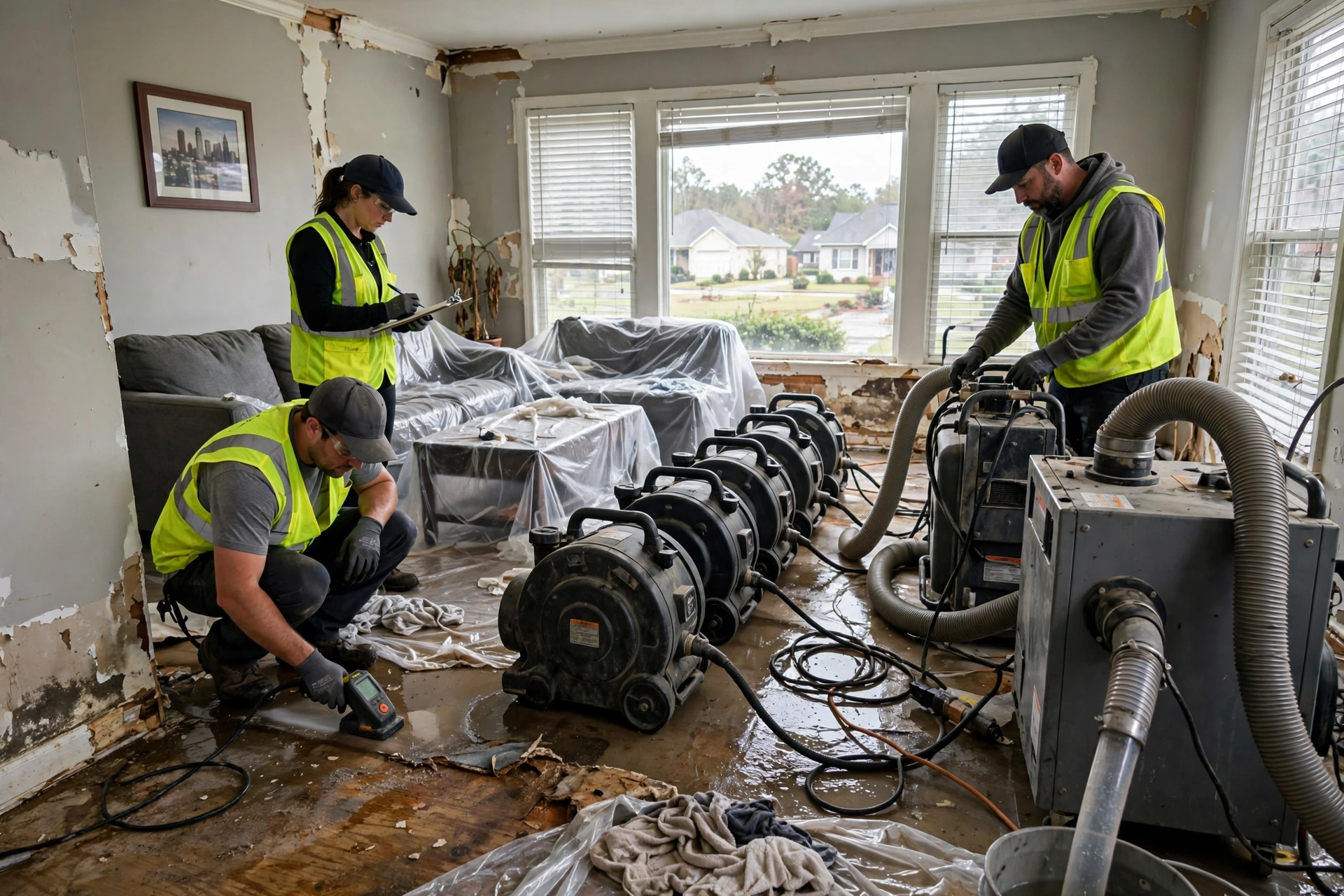
When water pours into a home, the first question most homeowners ask is some version of this: how much is this going to cost me? If you are searching for water damage restoration cost in North Carolina, you need a number you can plan around before an adjuster or contractor starts guessing on your behalf.
This guide breaks down what water damage restoration typically costs across North Carolina in 2026, from Charlotte and the Triangle to the coast, what drives the price up or down, and where homeowners most often overpay. Every price range below is a national industry average reported by cost aggregators and restoration trade data, not a quote. Your actual cost depends on the water category, the square footage affected, the materials involved, and how quickly the work starts. For an exact figure, you need an on-site water damage assessment with moisture readings, not a phone estimate.
How Much Does Water Damage Restoration Cost in North Carolina?
Here is the short answer first. National industry data puts the average cost of professional water damage restoration somewhere between $1,200 and $5,000 for a typical residential job. Small, clean-water incidents that are caught early can land between $500 and $1,500. Larger jobs involving contaminated water, multiple rooms, or structural repairs commonly run $5,000 to $15,000 or more. These are national industry averages; costs in Charlotte, Raleigh, Durham, Greensboro, and the surrounding metro areas generally track close to those ranges.
Another way to think about it: professional structural drying typically runs about $3.50 to $7.50 per square foot of affected area as a national industry average, covering extraction, dehumidification, air movement, and moisture monitoring. Demolition and rebuild, removing and replacing drywall, insulation, flooring, and trim, is priced separately and is often what pushes a job from a few thousand dollars into five figures.
What Drives the Cost of Water Damage Restoration
Two houses can flood from the same storm and end up with bills that differ by thousands of dollars. The gap almost always comes down to five factors.
1. The category of water
The restoration industry classifies water into three categories, and the category is the single biggest cost driver. Category 1, clean water, comes from a supply line, a burst pipe, or an overflowing sink with no contaminants. It is the cheapest to handle because drying and sanitizing are relatively straightforward. Category 2, gray water, comes from washing machines, dishwashers, and sump pump failures. It carries some contaminants and requires more aggressive cleaning. Category 3, black water, includes sewage backups and floodwater from storms or rising rivers. Black water requires full personal protective equipment, removal of all porous materials it touched, and hospital-grade disinfection. As a national industry average, black water cleanup typically costs two to three times what clean water cleanup costs for the same square footage.
This matters a lot in North Carolina. Tropical storms and hurricanes push storm surge and river flooding into homes from Wilmington and Fayetteville inland, and that water is always treated as Category 3. A burst supply line in a Charlotte suburb and floodwater in a coastal home may look similar, but the remediation protocol and the price are completely different. If you are dealing with storm-related flooding, read our guide to flood water removal and flood damage restoration before you sign anything.
2. How much area is affected
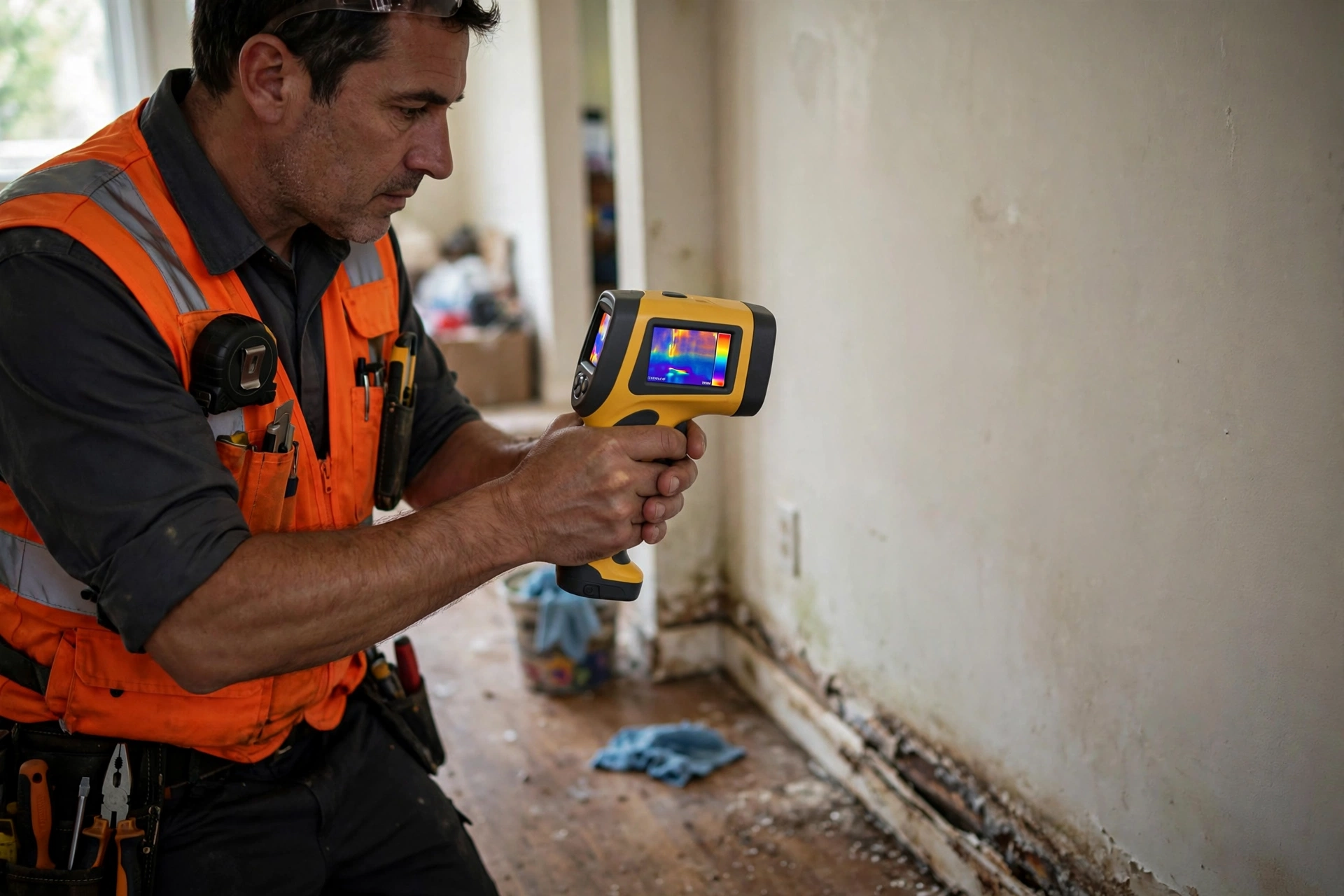
Cost scales with square footage, but not perfectly. A single wet room might cost $1,000 to $3,000 as a national average, while water that traveled through wall cavities into two or three rooms can easily double that. Water does not respect room boundaries: it wicks up drywall, runs under baseboards, and seeps into subflooring. A proper assessment uses moisture meters and thermal imaging to map exactly where the water went, which is why the size of the wet area matters more than the size of the visibly damaged area.
3. The materials that got wet
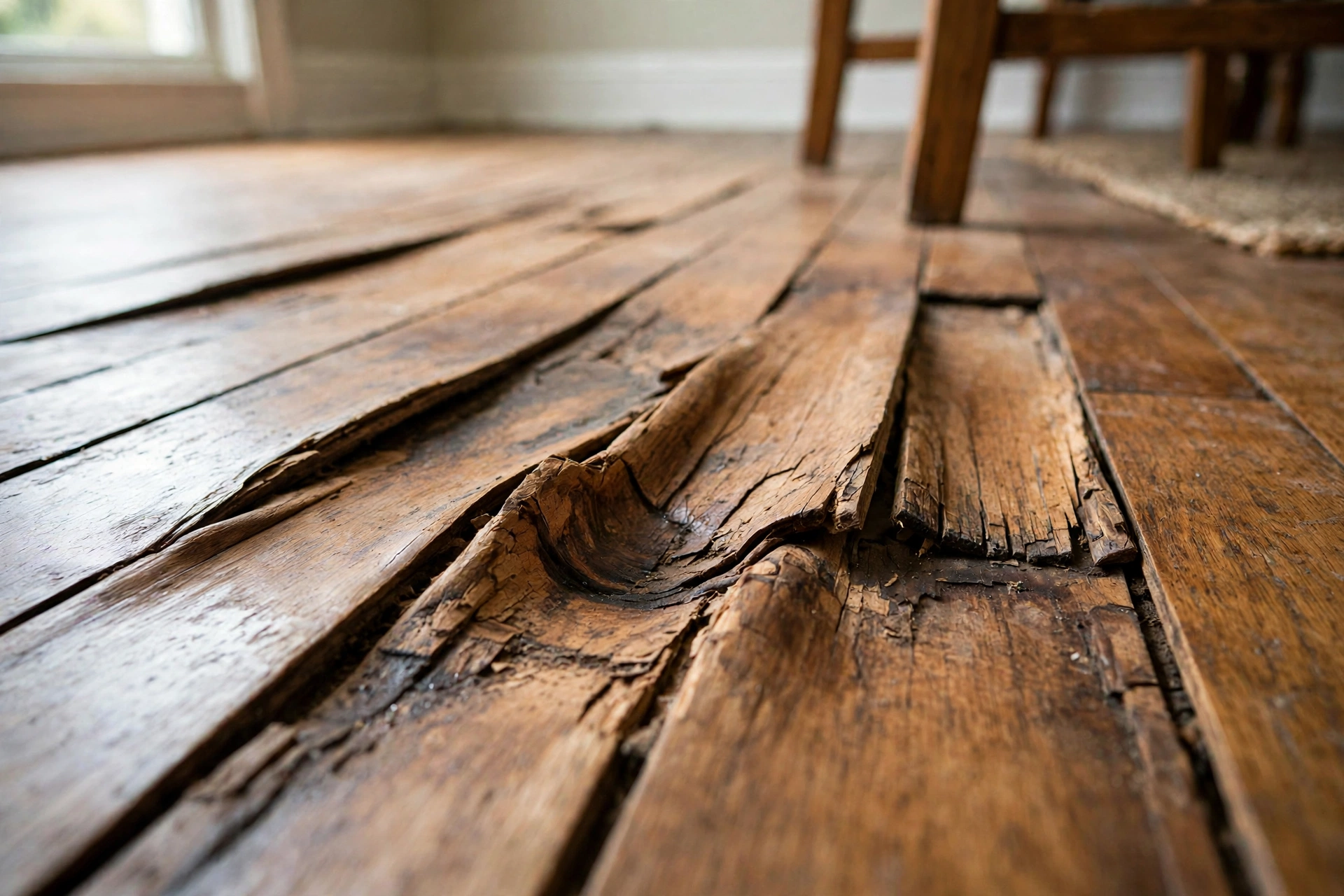
Some materials dry well and can be saved, and some cannot. Carpet and pad are inexpensive to replace but absorb water fast. Hardwood floors are expensive to restore and may cup, buckle, or warp if drying is delayed. Drywall wicks water upward and often must be cut out and replaced above the visible water line, and insulation behind wet drywall almost always has to go. Many North Carolina homes sit over vented crawlspaces, and a damp crawlspace can damage floor joists, subflooring, and ductwork in ways that are invisible from inside the living space.
4. How long the water sat
Time is the multiplier on every other cost factor. Water extracted within hours of an event is a drying job. Water that sat for two or three days is a drying job plus probable mold remediation. Water that sat for a week is often a partial rebuild. North Carolina's humidity makes this worse than in drier states: in the summer, mold can begin growing on damp organic materials within 24 to 48 hours, which is why emergency water extraction exists as a service.
5. Labor, access, and logistics
The last major factor is the practical stuff: how many technicians the job needs, how many days the drying equipment must run, and how hard the space is to access. A flooded basement with a narrow stairwell takes longer to extract than a ground-floor room with a walkout door. Multi-story water travel adds labor because two levels need drying and possibly demolition. Commercial jobs add their own layer of complexity, which is why commercial water damage restoration is quoted differently from residential water damage repair.
Cost by Type of Water Damage
Averages get more useful when tied to the actual scenario in your house.
Burst pipes and supply line leaks
A burst washing machine hose or a frozen pipe that thaws and splits is the classic clean-water event. If it is caught within hours and affects one room, national industry averages put the total restoration cost around $1,000 to $4,000, including extraction, drying, and minor drywall or flooring repair. If the leak ran for days while you were away, or traveled from an upstairs bathroom into the kitchen below, expect $5,000 to $12,000 as a national average. Winter freeze events in the Charlotte and Triad areas make burst pipes a real seasonal risk even in a mild-climate state.
Sump pump failures and basement flooding
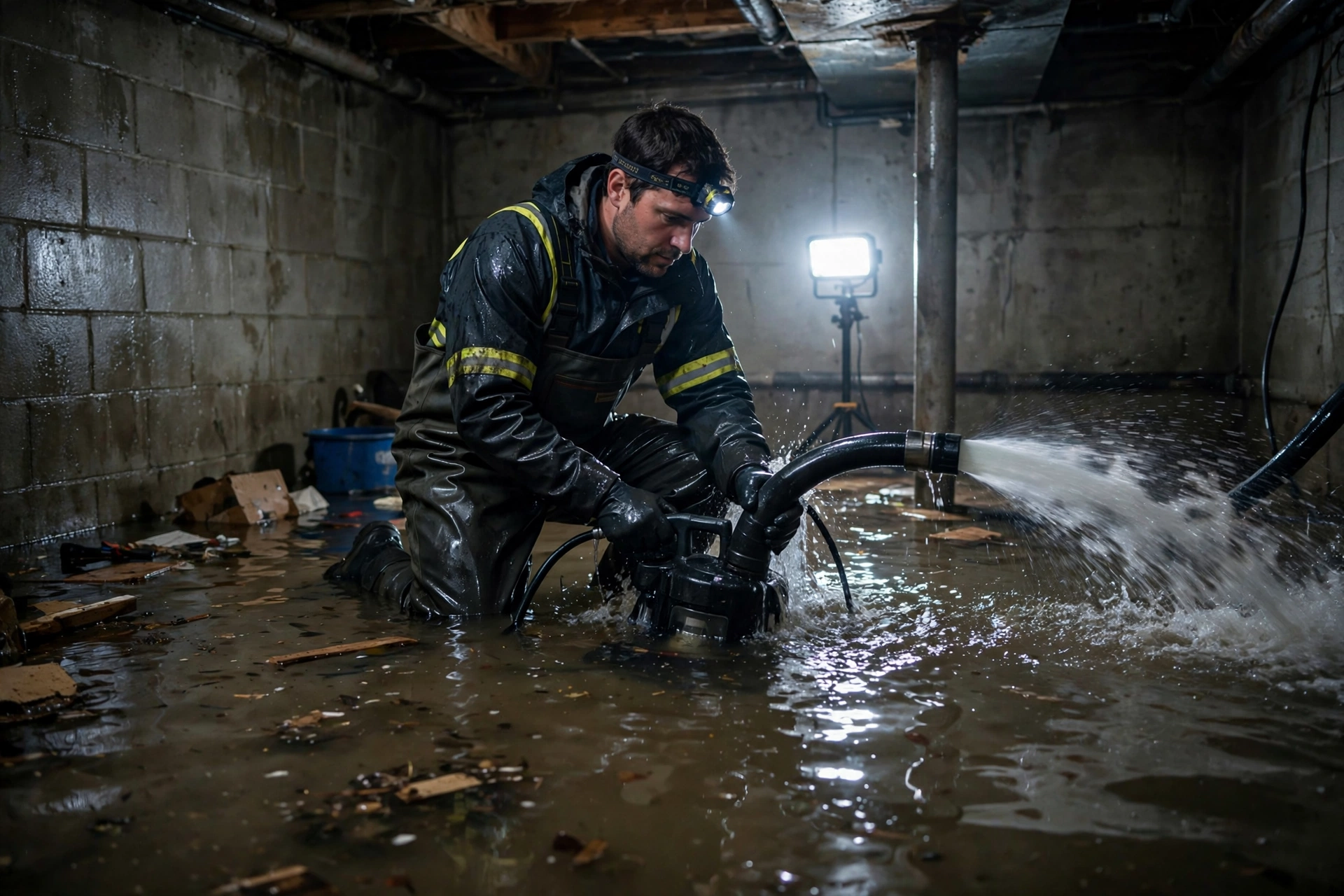
Basements and crawlspaces in the Piedmont can take on water during heavy rain when a sump pump fails or is overwhelmed. For a flooded basement, national industry averages run $2,000 to $8,000 for extraction and drying, and $5,000 to $15,000 or more when finished walls, flooring, or belongings are heavily damaged. Sewage backups into a basement are Category 3 and sit at the top of that range. If your basement flooded, our flooded basement cleanup page covers what the first visit should include.
What Is Included in a Professional Restoration Quote
A proper water damage restoration quote is a sequence of services, and knowing the sequence helps you tell a thorough bid from a thin one.
Inspection and moisture mapping
The first visit should include moisture readings across affected and adjacent areas, thermal imaging where warranted, and a written scope of work. Many companies apply the inspection fee toward the job if you hire them. This stage answers the questions that determine everything else: what category of water is this, how far did it travel, and which materials can be dried versus replaced? If a quote was written without a single moisture meter reading, treat it as a guess.
Water extraction
Standing water is removed with truck-mounted or portable extractors and, in basements, submersible pumps. Extraction is usually the smallest line item on the bill, often a few hundred dollars as a national average, but it is the most time-sensitive. Every hour of standing water is an hour of wicking into drywall and soaking into subflooring. Same-day emergency water extraction is standard in the industry for active flooding.
Drying and dehumidification
This is the core of the job and the largest equipment line item. Industrial air movers and dehumidifiers run for three to five days on a typical job, with regular moisture monitoring visits. Daily equipment rental and monitoring fees are where the per-square-foot math from earlier comes from. Cutting drying short to save a day or two of equipment charges is a false economy in North Carolina's humidity, because the ambient air is already loaded with moisture and materials reabsorb it fast.
Demolition and material removal
Wet drywall, saturated insulation, ruined carpet pad, and swollen baseboards get cut out and hauled away. Demolition pricing depends on how much has to go: removing the bottom two feet of drywall around a room (called a flood cut) is routine, while gutting a finished basement is not. Ask whether the quote includes debris disposal, because dumpster and haul-away fees are sometimes buried in fine print.
Cleaning, sanitizing, and mold prevention
After drying, affected surfaces are cleaned and treated with antimicrobial agents. If mold is already present, remediation is a separate scope with its own pricing, because it requires containment barriers, negative air pressure, and HEPA filtration. National industry averages for mold remediation run $500 to $6,000 depending on the extent.
Rebuild and repair
Some restoration companies hand off the rebuild to a general contractor, and some do it in house. Either way, the rebuild, new drywall, paint, flooring, trim, is priced like any remodeling work and varies most by finish level. Get the rebuild estimate in writing before demolition starts so you are not negotiating with half your walls open.
The Real Cost of Waiting
Homeowners sometimes delay calling because they hope the water will dry on its own or because they want to compare three quotes first. In North Carolina, delay is the most expensive line item on the bill, and it never appears as a line item. It shows up as a job that grew.
Here is the timeline that restoration professionals work from. In the first 24 hours, water spreads and soaks into porous materials. Between 24 and 48 hours, in a humid climate like North Carolina's, mold can begin growing on damp drywall, wood, and paper-backed materials. After 48 to 72 hours, water damage becomes significantly harder and more expensive to remediate: drywall crumbles, wood swells and warps, and musty odors set in. After a week, what started as a drying job is frequently a partial reconstruction with mold remediation attached.
The U.S. Environmental Protection Agency advises that mold can start growing on damp building materials within 24 to 48 hours and recommends drying or removing wet materials quickly to prevent it (U.S. Environmental Protection Agency, n.d.). FEMA's guidance for homeowners after flooding similarly emphasizes removing water and beginning drying as soon as it is safe, because delayed cleanup increases both health risks and repair costs (Federal Emergency Management Agency, n.d.). In practical terms, a $2,000 drying job on day one can become an $8,000 drying-plus-mold job on day four. The clock starts when the water starts, not when you call.
Insurance and Water Damage Costs in North Carolina
Whether insurance pays for your water damage depends on one distinction that confuses almost every homeowner: the difference between water damage and flooding. A standard homeowners policy in North Carolina generally covers sudden and accidental water damage, such as a burst pipe or an appliance failure. It does not cover flooding, meaning water that rises from the ground, storm surge, or overflowing rivers. Flood coverage comes from a separate flood insurance policy, most commonly through the National Flood Insurance Program, and the North Carolina Department of Insurance regularly reminds residents that flood policies have a 30-day waiting period before they take effect (North Carolina Department of Insurance, n.d.).
A few North Carolina specific notes. If your mortgage is in a FEMA-mapped high-risk flood zone, your lender likely requires flood insurance already. Many homeowners outside the mapped zones skip it, but a large share of flood claims come from outside high-risk zones. The IICRC publishes the S500 Standard for Professional Water Damage Restoration, the reference most reputable contractors and many adjusters use to define proper drying procedures (IICRC, 2021).
If you are working through a claim, our page on insurance claim water damage restoration walks through documentation, adjuster coordination, and the direct billing process. One practical tip: you are generally not required to use the contractor your insurer suggests. You have the right to hire the restoration company you trust, and a reputable company will document everything in the format adjusters expect.
How to Get an Accurate Estimate Without Overpaying
You cannot get a real price from a phone call, but you can avoid the common traps. First, insist on an on-site assessment with moisture readings before anyone quotes a total. Second, ask for the scope in writing: what will be dried, what will be removed, how many days of equipment, and what the rebuild covers. Third, compare scopes, not just totals. A $3,500 quote that includes full moisture mapping and monitoring can be a better deal than a $2,800 quote that skips them. Fourth, coordinate the rebuild handoff carefully if you use a separate contractor, so the space is verified dry before new materials go in. Trapping moisture behind new drywall is how you pay for the same job twice.
If you are facing water damage right now anywhere in the Charlotte area, the Triangle, the Triad, or the surrounding communities, Water Damage North Carolina provides on-site assessments with full moisture mapping. Call (855) 951-5633 for a free assessment, or reach out through our contact page. Our office is at 320 Westwood Ave, Charlotte, NC 28203, and we serve homeowners across the state, including Raleigh, Greensboro, Durham, Winston-Salem, Fayetteville, and Wilmington.
Frequently Asked Questions
What is the average water damage restoration cost in North Carolina?
Does homeowners insurance cover water damage restoration in NC?
How much does it cost to dry out a flooded basement in North Carolina?
Why do restoration quotes vary so much for the same flood?
Can I save money by drying water damage myself?
How fast does mold grow after water damage in North Carolina?
References
- Federal Emergency Management Agency. (n.d.). After a flood: Cleanup and recovery guidance for homeowners. https://www.fema.gov
- IICRC. (2021). ANSI/IICRC S500 standard for professional water damage restoration (5th ed.). Institute of Inspection, Cleaning and Restoration Certification. https://www.iicrc.org
- National Flood Insurance Program. (n.d.). Flood insurance claims and coverage information. https://www.floodsmart.gov
- North Carolina Department of Insurance. (n.d.). Flood insurance consumer information. https://www.ncdoi.gov
- North Carolina State University Extension. (n.d.). Disaster recovery resources for North Carolina homeowners. https://www.ces.ncsu.edu
- U.S. Environmental Protection Agency. (n.d.). Mold course: Mold remediation in schools and commercial buildings. https://www.epa.gov/mold
Water damage can't wait.
Available 24/7 across Charlotte and North Carolina. Call (855) 951-5633 now for help day or night.