
Home / Blog / What to Do in the First 24 Hours After Water Damage: A North Carolina Homeowner's Guide
Water Damage North Carolina BlogWhat to Do in the First 24 Hours After Water Damage: A North Carolina Homeowner's Guide
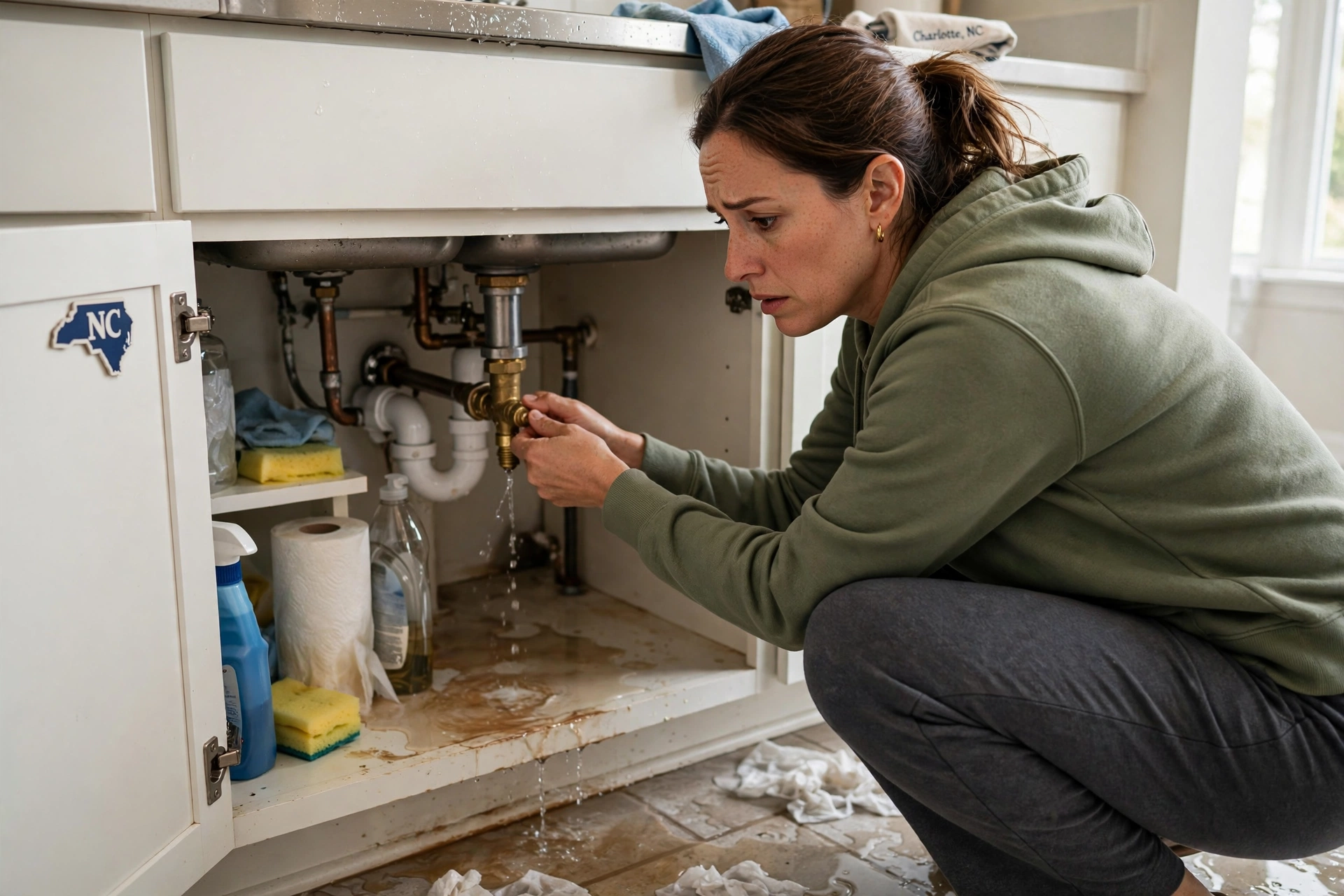
Water damage in North Carolina rarely announces itself politely: sometimes it is a tropical storm dropping inches of rain overnight, sometimes a washing machine hose that lets go while you are at work in Charlotte, sometimes a slow Gastonia bathroom leak that finally reaches the subfloor. However it starts, the first 24 hours determine how expensive the repair will be, how much of your home can be saved, and whether mold becomes part of the story.
This guide walks you through exactly what to do, hour by hour, when water damages your North Carolina home. Every step prioritizes your safety first, because water and electricity do not negotiate, and because contaminated floodwater is a health hazard long before it dries. You will learn how to document damage for your insurer, what you can safely handle yourself, and when to call in emergency water extraction professionals.
Hour 0 to 1: Make the Home Safe Before Anything Else
Before you touch anything wet, handle safety. Electricity, contamination, and structural collapse are the three ways water damage hurts people, and in North Carolina, where tropical systems regularly flood homes from Fayetteville to Concord, these hazards cause most post-event injuries.
Electrical Safety
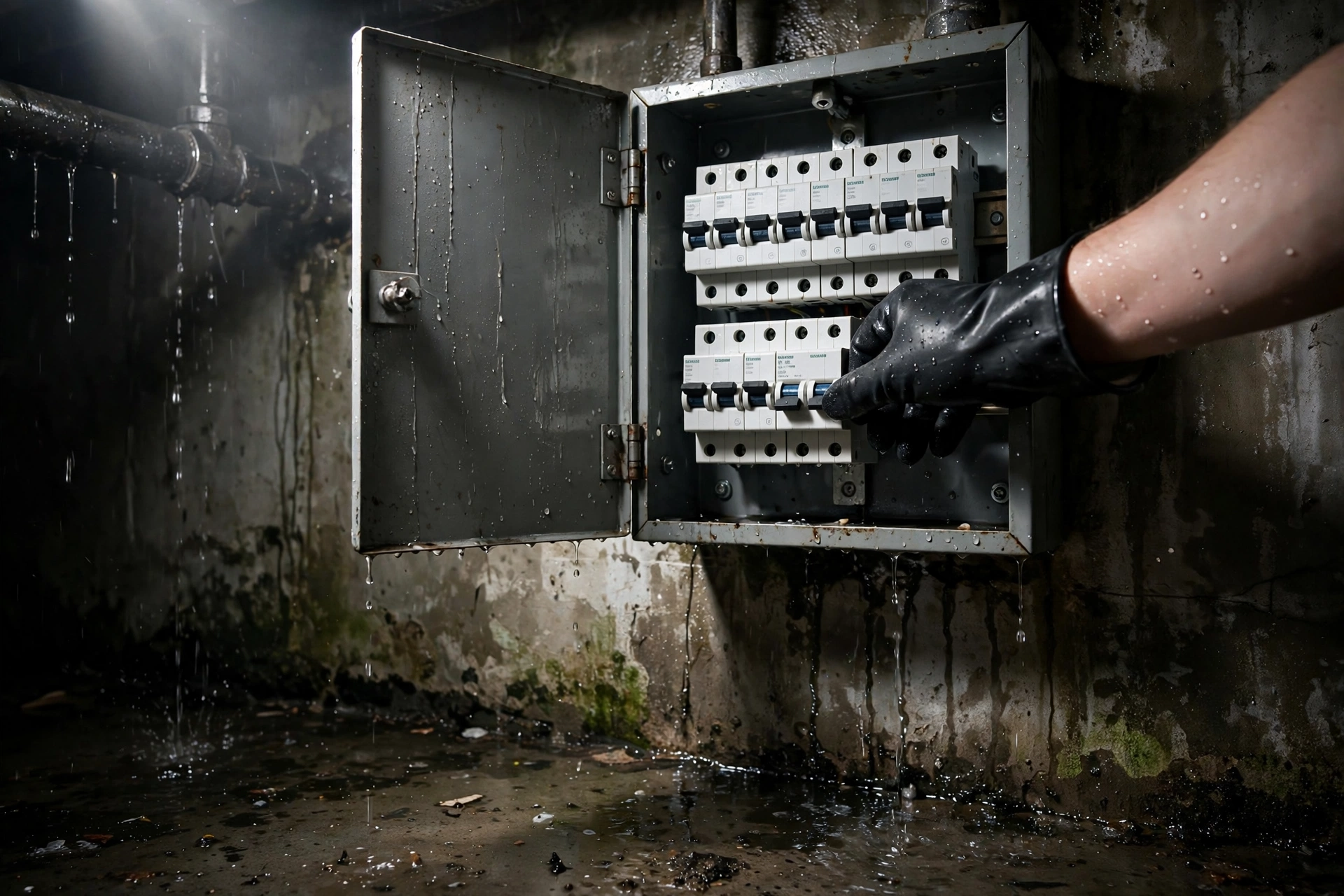
Never step into standing water that may be in contact with electricity. If water is near outlets, appliances, the breaker panel, or any electrical device, treat the area as energized until proven otherwise. Do not plug in pumps, fans, or wet vacuums until affected circuits are confirmed off. If the panel is wet or you must walk through water to reach it, stop and call your utility company or an electrician; North Carolina utilities will disconnect power at the meter for flood emergencies at no charge.
Understand the Three Water Categories
Restoration professionals classify water damage by contamination level, and what you should do depends on which category you are dealing with:
- Category 1 (clean water): broken supply lines, overflowing tubs, melting ice maker lines. Low contamination risk, but it degrades to Category 2 within 48 hours in warm weather.
- Category 2 (gray water): washing machine overflow, dishwasher discharge, toilet bowl water without solids. Contains microorganisms that can cause illness with skin contact.
- Category 3 (black water): sewage backups, rising floodwater from rivers or storm surge, any water that has touched the ground outdoors. Assume it carries bacteria, viruses, pesticides, and fuel residues. Never enter Category 3 water without professional protective gear.
After tropical storms, assume all standing water is Category 3. Creek water that reaches your living room has picked up everything from septic overflow to road chemicals on its way in.
Watch for Structural Hazards
Saturated drywall ceilings can collapse without warning, sometimes hours after the water arrives. Do not stand directly under a bulging, sagging, or dripping ceiling. If a ceiling bulges with trapped water, the safest move is to leave the room and let professionals drain it in a controlled way. After major flooding, check exterior walls for leaning or cracking, and do not enter rooms where the floor feels spongy or uneven.
Real talk: the most dangerous thing about water damage is not the water; it is the confidence that you know what is in it and where the current is running. A wet basement floor and a live extension cord look harmless until they are not. Five minutes of caution here buys you everything.
Hour 1 to 3: Stop the Water and Document Everything
Once the area is electrically safe, stop the source and build your insurance paper trail, in parallel if possible.
Shut Off the Source
- Plumbing leaks: turn off the water at the fixture valve, or at the main shutoff if you cannot find a local valve. In North Carolina, main shutoffs are usually near the water meter by the street, in a garage, or in a crawlspace. Learn where yours is before an emergency.
- Water heater failure: shut off the cold-water inlet valve above the unit and turn off its power supply (breaker or gas valve).
- Toilet overflow: turn the small oval valve behind the toilet clockwise to stop flow.
- Storm flooding: there is no source to shut off, but you can slow intrusion. Place sandbags or towels at entry points, move valuables uphill within the house, and elevate electronics and documents.
Document the Damage Like an Adjuster Is Watching
Your North Carolina homeowners policy pays based on evidence, so act like your own best investigator. Insurers commonly require proof that damage occurred during the covered event and that you took reasonable steps to limit it:
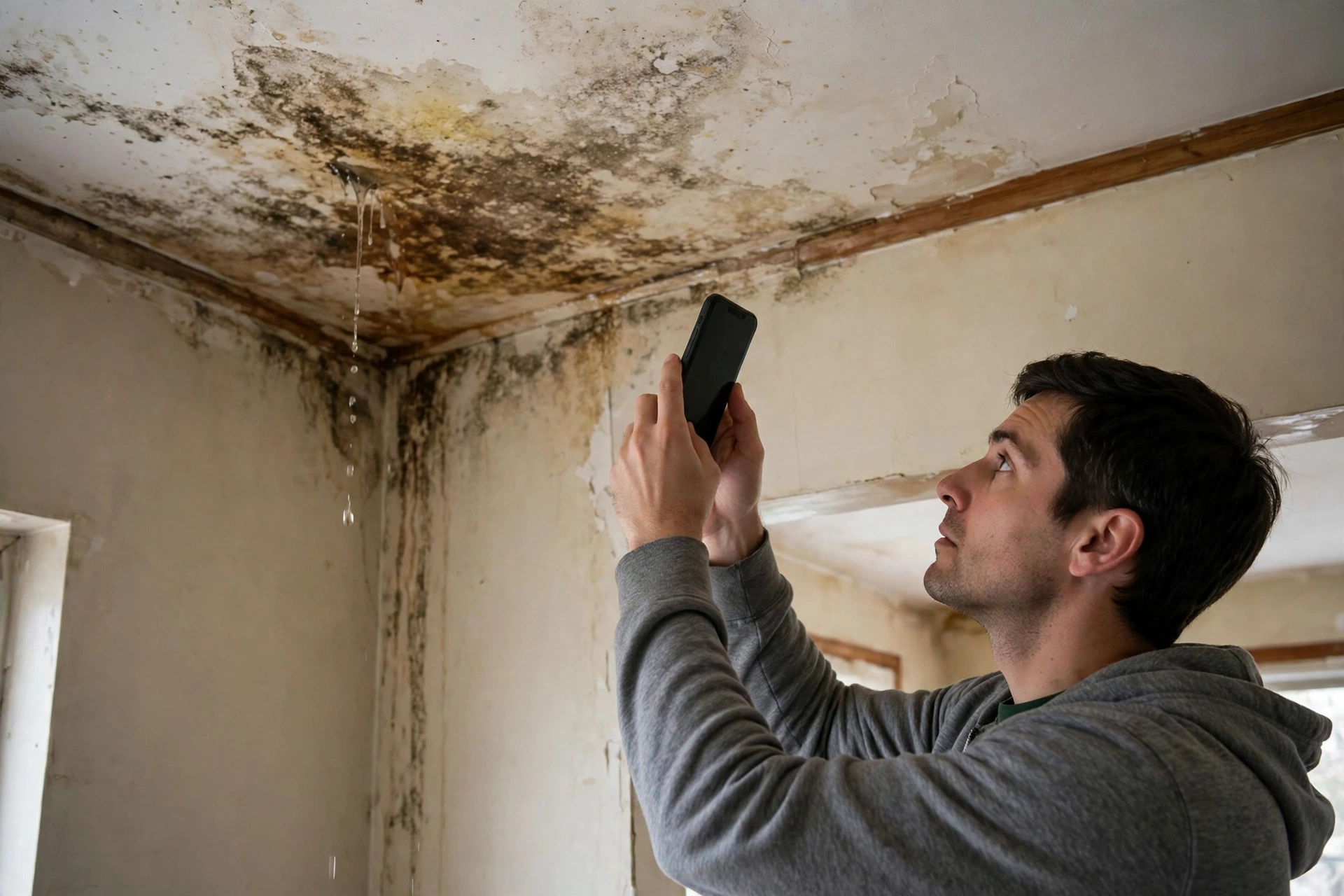
- Photograph before you clean: shoot wide angles of every affected room, then close-ups of water lines on walls, soaked flooring, damaged belongings, and the water source. Video walkthroughs with narration of the date and time are even stronger.
- Do not throw anything away yet: keep damaged items until your adjuster has seen them. If you must discard perishables or hazards, photograph them first from multiple angles.
- Log everything: write down the time you discovered the damage, what you believe caused it, every action you took, and who you called with timestamps. North Carolina insurers value a contemporaneous timeline when questions arise about delays.
- Save receipts: keep every receipt for fans, dehumidifiers, towels, tarps, and temporary lodging. Most policies reimburse reasonable emergency mitigation costs.
If the situation involves heavy flooding or structural concerns, scheduling a professional water damage assessment early gives you an independent record of the damage scope that complements your own photos.
Hour 3 to 6: Remove Standing Water and Protect Belongings
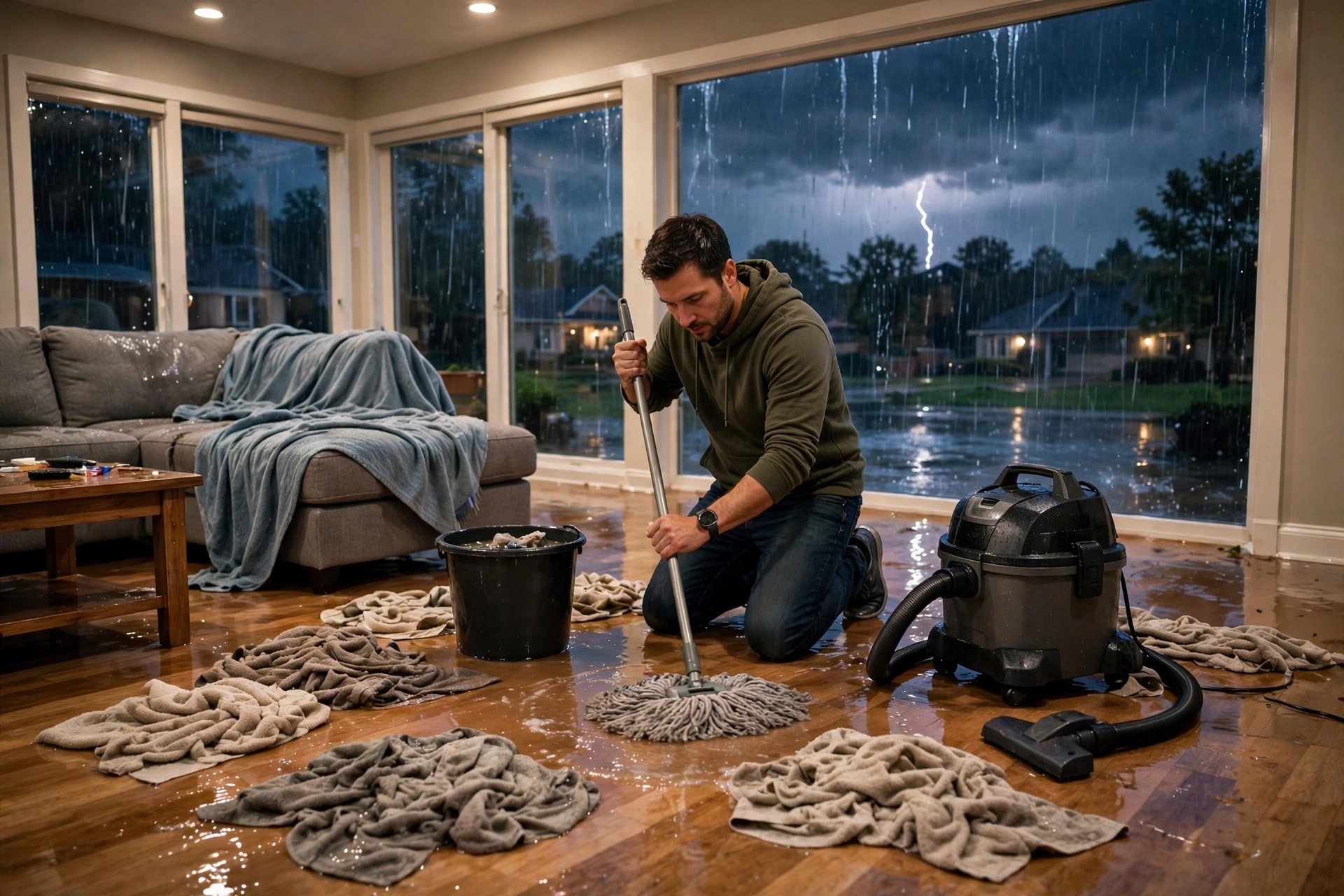
With the source stopped and documentation done, start removing water. Every hour it sits, it wicks higher into drywall, soaks deeper into subflooring, and pushes more moisture into the air.
Safe DIY Water Removal
For Category 1 water only, and only after electrical safety is confirmed:
- Extract with a wet/dry vacuum or pump out with a submersible pump if the volume is large. Work from the shallowest areas toward the deepest.
- Move furniture off wet flooring and place wood furniture on foil or plastic blocks to prevent staining. Remove rugs and hang them to dry.
- Pull out affected contents: move boxes, fabrics, and papers to a dry area. Fabrics left sitting on wet carpet will wick moisture upward.
- Remove baseboards if water wicked behind them: a small gap at the wall base allows airflow into wall cavities and makes hidden moisture measurable.
- Mop and wipe remaining moisture from hard surfaces after extraction.
For Category 2 or 3 water, skip DIY removal and call a flood water removal team. Contaminated water requires professional-grade disinfection, and gray or black water in carpeting or padding generally means those materials must be removed, not cleaned. If your basement has taken on water, watch the volume: pumping out more than a few inches at a time from a basement below grade can create pressure differences that crack foundation walls. Professionals pump in stages and monitor structural response.
Protective Gear Is Not Optional
Even clean water mixes with whatever is in your carpet, floors, and drywall dust. Wear rubber boots, waterproof gloves, and eye protection whenever you are working in wet areas. For anything beyond a minor clean-water spill, add an N95 respirator against mold spores and fine particles from disturbed drywall and damp debris. Keep children and pets out of the work area entirely.
Hour 6 to 12: Start Drying and Fight the Humidity
Removing visible water is only half the battle. North Carolina's climate is the other half. Summer humidity in the Piedmont and Coastal Plain routinely sits above 70 percent, and that moist air works against you around the clock. Wet materials in a humid house do not dry; they incubate. This is why homes in Charlotte and Raleigh can develop musty odors within a day of water intrusion while the same leak in a dry climate would simply evaporate.
Airflow and Dehumidification
Start aggressive drying as soon as standing water is gone:
- Open the airflow: place box fans or air movers blowing across (not directly into) wet surfaces. Air movement across a surface evaporates moisture far faster than a fan aimed straight down.
- Dehumidify relentlessly: run every dehumidifier you own, plus your air conditioner's dry mode, to pull moisture from the air. In summer, close windows so you are not fighting outdoor humidity. In winter, modest heat helps the dehumidifier work.
- Pull back wet carpet from the tack strip in affected areas so air reaches the pad and subfloor, or remove carpet and pad entirely if the water was Category 2 or 3.
- Open closets, cabinets, and drawers in wet areas. Hidden pockets of still air are where mold colonies start.
Do Not Forget the Crawlspace
Many North Carolina homes sit on crawlspaces, where trapped water evaporates upward through the subfloor, keeping indoor humidity high for weeks and inviting mold, wood rot, and termites. If your crawlspace has standing water after a storm, it needs pumping and drying too. Check under the house, because crawlspace flooding is easy to miss and expensive to ignore. A plastic vapor barrier slows evaporation, but soaked crawlspace insulation should be removed since it rarely dries in place.
Hour 12 to 24: Beat the Mold Clock and Decide What Needs Professionals
The deadline that matters most: mold can begin growing on wet materials within 24 to 48 hours under warm, humid conditions (Federal Emergency Management Agency, 2023). North Carolina in storm season is exactly those conditions, so the second half of day one is a race against that clock.
What Professionals Do That Fans Cannot
Household fans dry surfaces, but hidden moisture is the real threat: water trapped in wall cavities, under flooring, and inside insulation keeps feeding mold long after surfaces feel dry. Professional crews use moisture meters and thermal imaging to map where water traveled, then deploy commercial dehumidifiers and air scrubbers sized for the job. Category 3 events require containment, antimicrobial treatment, and removal of unsalvageable materials under controlled conditions, which is exactly what professional crews, including storm flood repair teams, are equipped to do.
The Professional vs. DIY Decision
You can reasonably handle all of the following yourself: a small clean-water spill caught immediately, a minor appliance leak with water confined to a hard floor, and surface drying of affected rooms. Call professionals when any of these apply:
- The water is Category 2 or 3 (gray or black water).
- More than a small area of carpet, pad, or drywall is saturated.
- Water entered wall cavities, ceilings, or the crawlspace.
- You smell mustiness or see staining spreading after initial cleanup.
- The event involved flooding from outside the home.
- You or anyone in the household has asthma, allergies, or a weakened immune system.
Real talk: calling a professional is not admitting defeat. It is the fastest way to stop paying for the same square foot twice. The most expensive water damage jobs we see in this industry are the ones where a homeowner spent three days drying the surface while the wall cavity quietly grew a mold farm behind it.
What NOT to Do in the First 24 Hours
Mistakes in the first day are the ones that show up on your repair bill and your insurance claim months later. Avoid these:
- Do not use a regular vacuum on standing water. Household vacuums are not rated for water, and the combination of electricity and water is exactly the hazard you avoided in hour one.
- Do not pull up carpet without a plan. Wet carpet is extremely heavy, and yanking it can tear up tack strips and spread contaminated water. Fold back only what airflow needs, or leave removal to a crew.
- Do not ignore the ceiling below. A leak on the second floor is also a leak into the first-floor ceiling. Check rooms below and walls adjacent to the source.
- Do not caulk or seal over wet materials to hide the damage before the adjuster arrives. Insurers view concealment poorly, and sealing wet wood guarantees rot.
- Do not just crank the heat. Heat without dehumidification creates a sauna that accelerates mold growth; drying needs airflow plus moisture removal.
- Do not wade through floodwater to retrieve belongings. No object is worth the infection risk of Category 3 water. Sanitization after flooding is a professional process for a reason.
- Do not wait until Monday. Water does not observe business hours, and neither does the mold clock. If the damage is significant, start the cleanup now and make the insurance call within the day.
North Carolina Insurance Tips for Water Claims
Standard homeowners policies cover sudden and accidental water damage, like a burst pipe, but generally exclude flood damage from rising water. Flood needs separate National Flood Insurance Program coverage, which many North Carolina homeowners in flood-prone areas carry. Know which policy applies before you call.
- Call promptly: report the claim as soon as the situation is safe, ideally within 24 hours. North Carolina insurers can question late reports, especially after widespread storms when timelines matter.
- Mitigate first: policies require you to take reasonable steps to prevent further damage. Your receipts for pumps, fans, and tarps document that duty.
- Meet the adjuster prepared: have your photos, video, timeline, and receipts organized. A claim involving professional restoration goes smoother when the scope of work is documented from day one.
- Understand your deductible and limits: ask what your deductible is before authorizing work, and whether additional living expenses are covered if you must leave the home.
- Do not sign away rights hastily: read any release or settlement paperwork carefully, and get clarification on anything that limits future claims for hidden damage.
Frequently Asked Questions
Should I call my insurance company or a restoration company first?
How long can water sit before mold starts growing?
Is it safe to stay in my house after water damage?
What should I do about my wet carpet and padding?
My basement flooded during a storm. Can I pump it out myself?
Will my homeowners insurance cover the damage?
Act Fast, Stay Safe, and Get Help When It Counts
The first 24 hours after water damage come down to a short list: stay safe around electricity and contaminated water, stop the source, document everything, remove standing water, and start drying aggressively against North Carolina's humidity. Do those five things and you will limit the damage, protect your insurance position, and keep mold from moving in.
When the damage is beyond a quick DIY cleanup, Water Damage North Carolina is available at (855) 951-5633 for emergency water extraction and full restoration support across Charlotte and surrounding communities including Fayetteville, Gastonia, and Concord. Visit our office at 320 Westwood Ave, Charlotte, NC 28203, or reach us through the contact page. The sooner professionals are drying your home, the less of it ends up in a dumpster.
References
- Federal Emergency Management Agency. (2023). After the flood: Cleanup and the Red Cross. U.S. Department of Homeland Security. https://www.fema.gov/fact-sheet/after-flood-cleanup-and-red-cross
- U.S. Environmental Protection Agency. (2024). Mold course chapter 2: Why and where mold grows. https://www.epa.gov/mold/mold-course-chapter-2
- Centers for Disease Control and Prevention. (2024). Homeowner's and renter's guide to mold cleanup after disasters. https://www.cdc.gov/mold-health/risk-prevention/homeowners-and-renters-guide-to-mold-cleanup-after-disasters.html
- Ready.gov. (2024). Floods: What to do after a flood. U.S. Department of Homeland Security. https://www.ready.gov/floods
- North Carolina Emergency Management. (2024). Before, during, and after a flood. North Carolina Department of Public Safety. https://www.ncdps.gov/our-organization/emergency-management/floodplain-management/floods
- American Red Cross. (2024). Repairing your flooded home. https://www.redcross.org/get-help/how-to-prepare-for-emergencies/types-of-emergencies/flood/repairing-your-flooded-home.html
Water damage can't wait.
Available 24/7 across Charlotte and North Carolina. Call (855) 951-5633 now for help day or night.